

Rental Price List


VIGX ANT-H1 PRO
VIGX π PLUS
VIGX® Exoskeletons
Try before you buy
Renting allows you to test the exoskeleton in real-world conditions – at home, on a walk, in the mountains, or during sports activities – without an immediate investment.
More power & less effort
The Exoskeleton helps you walk, lift your legs, maintain stability on uneven terrain, and cover longer distances. Ideal for hiking, travel, or recovery.
Assistance for running, cycling or everyday movement
Reduces fatigue, supports joints, and improves movement efficiency. Suitable for recreation, sports, or maintaining physical fitness.
Excellent support for rehabilitation
The exoskeleton offers additional stability during recovery from injuries or surgeries. It helps re-establish proper walking patterns.
Adaptable for various ages and body types
Suitable for the young, the elderly, and everyone in between – the exoskeleton adapts to your body structure and needs to ensure comfortable, efficient, and safe use.

Exoskeletons VIGX®
VIGX exoskeletons combine advanced mechanics and artificial intelligence that adapts in real-time to the user's movement.

Which exoskeleton to choose?
Choosing the right exoskeleton is crucial for the device's proper function and achieving the best results. It's important to select a model based on your needs, physical abilities, and goals.
Step 1: Choosing the correct exoskeleton model
1.a) ✅ Choose VIGX ANT-H1 PRO if at least one of the following applies:
- you have independent walking ability, but with limitations or pain
- you experience pain when walking
- you are in rehabilitation after injuries
- you are recovering after a stroke
- you have difficulty walking with both or just one leg (e.g., left or right)
- you are older and want to remain active and independent
👉 ANT-H1 PRO is designed to assist with walking and support movement, not as a sports accessory.
1.b) 💪 Choose VIGX π Plus if:
- you are a recreational athlete and want to maintain or improve your fitness
- you do not have direct walking difficulties
- you walk a lot and want to cover more distance in less time
- you want to lose weight
- you want to reduce fatigue during longer walks
- you engage in recreational sports such as cycling, running, hiking, cross-country skiing, and similar activities
Step 2: Choosing the correct size
The second most important step in choosing an exoskeleton is selecting the correct dimensions.
If the exoskeleton is too large or too small for your body type, it will not function optimally, and you will not realize its full potential.
2.a) 📏 Dimensions – VIGX ANT-H1 PRO
The ANT-H1 PRO is suitable for users with independent walking ability.
Thigh section size (based on user height):
- S: 150–165 cm
- M: 160–175 cm
- L: 170–185 cm
Waist size:
- M: hip width: 26–34 cm, waist circumference: 60–95 cm
- L: hip width: 30–38 cm, waist circumference: 76–113 cm
- XL: hip width: 34–42 cm, waist circumference: 95–133 cm
2.b) 📐 Dimensions – VIGX π Plus
Frame size (based on user height):
- S: 150–165 cm
- M: 165–185 cm
- L: 180–200 cm
Waist size (circumference):
- S: 72–82 cm
- M: 82–100 cm
- L: 100–125 cm
Leg strap circumference:
- S: 30–45 cm
- M: 40–62 cm
If you are unsure which size or model is right for you, we recommend calling us before purchase at 030 771 787 or sending an email to info@evolt.si.
We will be happy to help you find the most suitable size for your body type.
Try it for free!📍
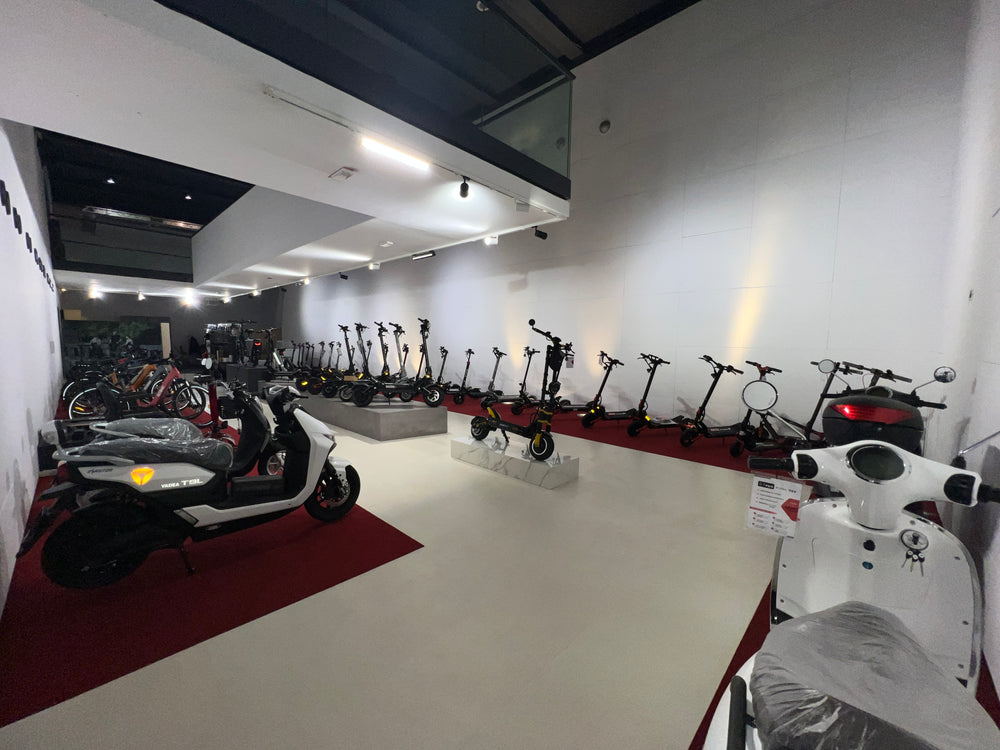
You are warmly invited to our showroom, where you can try the exoskeletons VIGX ANT-H1 PRO and VIGX π Plus completely free of charge.
Frequently Asked Questions
Learn about frequently asked questions regarding VIGX exoskeletons. For additional questions, please call us at 030 771 787.
What an exoskeleton is NOT?
For which conditions and diagnoses is the exoskeleton generally not suitable?
Is the ANT-H1 PRO a medical device?
Can I use an exoskeleton without prior experience?
How do I know if I am a suitable candidate for an exoskeleton?
Is the exoskeleton suitable for seniors?
How long does it take to get used to using an exoskeleton?
Can I use the exoskeleton for sports or recreation?
Is the exoskeleton safe to use?
Who is the ANT-H1 PRO for?
Can the ANT-H1 PRO be used by a person with complete leg paralysis?
I only have trouble walking with one leg. Which exoskeleton do you recommend for me?
Who is VIGX π Plus for?
Is π Plus suitable for rehabilitation?
Does π Plus help me lose weight?
Can I use the π Plus every day?
Exoskeleton VIGX π Plus


Exoskeleton VIGX ANT H-1 PRO


VIGX® Exoskeletons
-

 New
NewExoskeleton VIGX ANT-H1 PRO
Regular price From 2.699,90 €Sale price From 2.699,90 € Regular priceUnit price per12,000 stepsŽe od 45,43 €/mesec -

 Sold outNew
VIGX π Plus Exoskeleton
Regular price From 1.799,90 €Sale price From 1.799,90 € Regular priceUnit price per12,000 - 24,000 stepsŽe od 30,29 €/mesec -
Sold outNew
VIGX π Exoskeleton
Regular price From 1.599,90 €Sale price From 1.599,90 € Regular priceUnit price per12,000 stepsŽe od 26,92 €/mesec -

 Sold outNew
Exoskeleton VIGX A10
Regular price 2.799,90 €Sale price 2.799,90 € Regular priceUnit price per4-5 hoursŽe od 47,11 €/mesec -

 Sold outNew
Exoskeleton VIGX ANT-WA1
Regular price 10.299,90 €Sale price 10.299,90 € Regular priceUnit price per4-5 hoursŽe od 173,32 €/mesec -

 Sold outNew
Exoskeleton VIGX Q20
Regular price 2.399,90 €Sale price 2.399,90 € Regular priceUnit price per4-5 hoursŽe od 40,38 €/mesec


Blog posts
-

Electric Bike Subsidy 2026: How to Apply Step-by-Step
Electric Bike Subsidy 2026: How to Submit Your Application Step-by-Step...9 min read -

KuKirin error codes: what do the errors on KuKirin Electric Scooters mean?
An error code is a diagnostic message that the scooter...13 min read -

Ultimate guide to choosing an ECONO e-bike (2026 Series): Analysis of all models
Choosing the right electric bike is often complicated due to...6 min read -

Step-by-step to the E-bike subsidy in 2026
In this article, we explain who is eligible for the...5 min read -

Electric scooters are safe if we know how to use them: how to properly maintain the battery and why buying cheap from abroad does not pay off
In this article, we reveal how to take care of...6 min read -

Riding electric scooters and mopeds from now on only for those over 15 years old
Slovenian legislation in the field of micro-mobility has undergone a...4 min read -

Unitree Robots: The Future of AI at EVOLT
We are proud to announce that eVolt has become the...4 min read -

Free trial of the VIGX ANT-H1 PRO exoskeleton in Ljubljana
If you are experiencing walking difficulties, we invite you for...2 min read


